1. Introduction
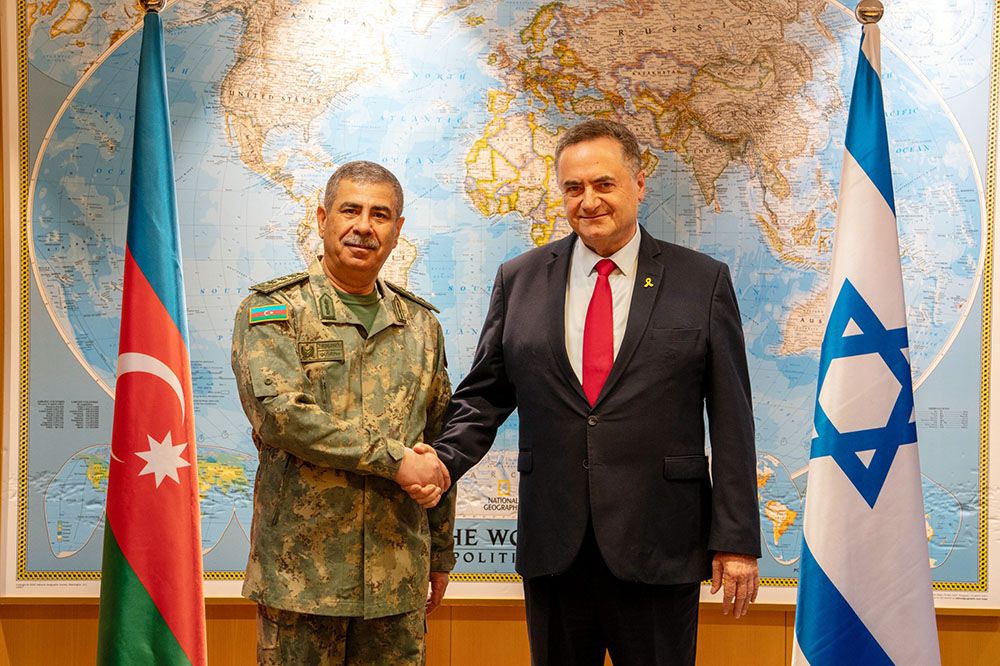
Since the Republic of Azerbaijan gained independence in 1991, integrating the country into the Israel’s political and security architecture, within the framework of the periphery doctrine, has been one of Tel Aviv’s strategic objectives in the South Caucasus. Following the collapse of the Soviet Union, Israel sought to establish ties with a country that shared a border with Iran while also having access to Central Asia’s transport corridors. Azerbaijan’s geopolitical position offered Israel an opportunity to expand its regional influence and strengthen its position within the United States’ Eurasian strategy.[1] Military and security cooperation, particularly arms transfers, has been among the principal instruments for achieving this objective. The nature, scale, and objectives of this cooperation, however, can be examined across two distinct but interconnected periods.
2. The First Period 1990 – 2020
The first period extends from the mid-1990s to Azerbaijan’s victory in the Second Nagorno-Karabakh War (2020). Although this period spans nearly three decades, the turning point in arms cooperation between the two countries came between 2010 and 2020, when both the volume and scope of cooperation increased significantly. During this period, the Nagorno-Karabakh conflict and Baku’s efforts to strengthen its military capabilities and shift the balance of power vis-à-vis Armenia were the primary drivers of its arms purchases from the Israel. Tel Aviv, in turn, sought to deepen defense ties and establish Azerbaijan’s dependence on Israeli arms by expanding its military exports. Other considerations, including the diversification of arms suppliers, the pursuit of greater military superiority and innovation, and economic factors, also influenced Azerbaijan’s decision to select Israel as an arms supplier.
The earliest indications of arms cooperation between Azerbaijan and Israel date back to 1993, when Baku sought to acquire weapons and strengthen its defense capabilities following Armenia’s military gains and Azerbaijan’s loss of part of its territory. At that time, Israel began providing military support to Baku by agreeing to supply equipment such as Stinger missiles. By 1996, this cooperation had expanded to include a broader range of equipment, including combat aircraft, artillery systems, anti-armor weapons, and anti-personnel weapons.[2] Israeli Prime Minister Benjamin Netanyahu’s visit to Baku in 1997 also marked a turning point in bilateral relations, as the two sides considered expanding intelligence and security ties alongside military cooperation.[3] During the 2000s, these relations gradually moved beyond their initial stage and became more formalized and organized.
At this stage, bilateral cooperation focused primarily on the provision of communications, reconnaissance, surveillance, and monitoring systems. For example, in 2001, the Israeli company Magal Systems signed a contract with its Azerbaijani counterpart to construct a security fence at Bina International Airport to protect this strategic infrastructure and provide training for its security personnel.[4] In subsequent years, however, cooperation gradually expanded beyond protective and surveillance equipment, while Azerbaijan’s purchases of Israeli military weapons increased. Table 1 presents Azerbaijan’s principal military purchases from Israel between 2005 and 2008.[5]
Table 1: Azerbaijan’s Major Military Purchases from Israel, 2005–2008
| Order/Contract Year | System or Equipment | Quantity | Israeli Company or Supplier | Delivery Status |
| 2005 | Lynx multiple rocket launcher system | 6 systems | Israel Military Industries (IMI) | Delivered in 2006 |
| 2005 | EXTRA guided rockets | 50 rockets | Israel Military Industries (IMI) | Delivered in 2008–2009 |
| 2007 | Aerostar reconnaissance UAVs | 4 UAVs | Aeronautics Defense Systems | Delivered in 2008 |
| 2008 | Hermes 450 tactical UAVs | 10 UAVs | Elbit Systems | Delivered in 2011–2013 |
| 2008 | Spike-LR anti-tank missiles | 100 missiles | Rafael | Delivered in 2009–2010 |
| 2008 | CARDOM 120 mm self-propelled mortars | 10 systems | Soltam | Delivered in 2010–2011 |
| 2008 | ATMOS 155 mm self-propelled howitzers | 5 systems | Soltam / Elbit Systems | Delivered in 2010 |
The 2008 Russia–Georgia war and its geopolitical consequences marked a turning point in Azerbaijan’s military relations with foreign arms suppliers. Growing concerns over Russia’s response prompted some of Baku’s traditional partners, including Turkey, Belarus, and Ukraine, to reconsider the scope and nature of their military cooperation with the region. These circumstances created more favorable conditions for expanding arms cooperation between Azerbaijan and Israel. For example, Baku awarded a $56 million contract to upgrade its T-72 tank fleet to the Israeli company Elbit Systems rather than the Turkish company Aselsan.[6] Around the same time, Tadiran Communications assumed responsibility for supplying modern command, control, and secure communications systems. Meanwhile, Israel Military Industries and Rafael began cooperating with Baku on rocket, artillery, and fire-control systems. This cooperation also included upgrading Soviet-made multiple rocket launch systems, including Grad and Smerch.[7]
Arms cooperation continued to expand in subsequent years. For example, in 2010, Elbit Systems undertook the modernization of Azerbaijan’s T-55 and T-72 tanks and BMP-2 infantry fighting vehicles, equipping them with advanced optical and electronic systems. Purchases of ATMOS-2000 self-propelled artillery systems, LAR-160 rocket launchers, and SkyStriker loitering munitions were also reported during this period.[8] The principal turning point in bilateral arms cooperation, however, came in 2011, when the two sides concluded a $1.6 billion agreement for the supply of military equipment. The agreement included the provision of UAVs and air and missile defense systems by Israel Aerospace Industries. Table 2 lists the principal equipment exported to Azerbaijan under this agreement.[9]
Table 2: Military Equipment Exported to Azerbaijan Under the 2011 Arms Agreement
| No. | Equipment | Quantity | Order Year | Delivery Year |
| 1 | Barak MX surface-to-air missile system | 1 system | 2011 | 2016 |
| 2 | Barak ER interceptor missiles | 40 missiles | 2011 | 2016 |
| 3 | Barak LRAD interceptor missiles | 40 missiles | 2011 | 2016 |
| 4 | Heron tactical UAVs | 5 UAVs | 2011 | 2013 |
| 5 | Searcher reconnaissance UAVs | 5 UAVs | 2011 | 2013 |
Alongside the expansion of Israel’s arms exports to Azerbaijan, the Israeli foreign minister’s visit to Baku in 2012 paved the way for a new phase of bilateral cooperation, encompassing joint production and military technology transfer in addition to arms purchases. In this context, Azerbaijan’s Ministry of Defense Industry established a joint venture with the Israeli company Aeronautics Defense Systems for UAV production under the name AZAD Systems, with the Azerbaijani side holding a 51 percent stake. By the end of 2012, Azerbaijan’s armed forces had acquired 60 Aerostar and Orbiter 2M UAVs. Israel Aerospace Industries also organized specialized training courses for UAV operators and invited Azerbaijani military personnel to participate. In June 2013, domestically produced UAVs, along with Israeli Hermes and Heron models, were displayed during a military parade.[10] This demonstrated Azerbaijan’s growing dependence on Israel for military equipment.
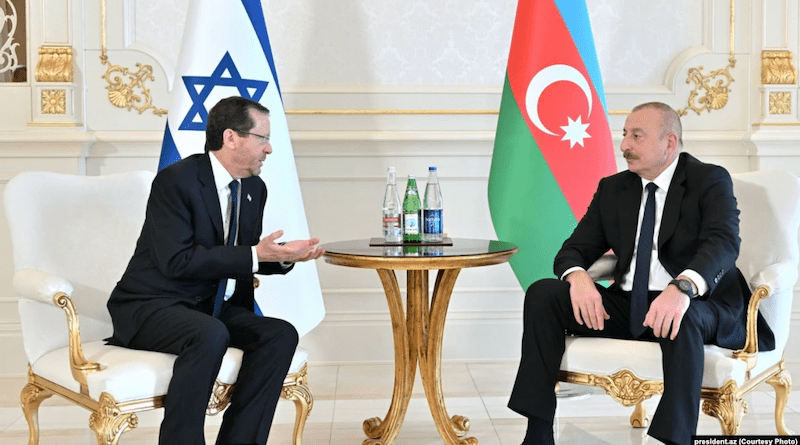
The extent of this dependence became more apparent during Benjamin Netanyahu’s visit to Baku in 2016. At a joint meeting, Ilham Aliyev announced that the value of contracts concluded between Azerbaijani and Israeli companies for the purchase of defense equipment had reached approximately $4.85 billion, and that most of these contracts had already been implemented.[11] Data from the Stockholm International Peace Research Institute (SIPRI) also confirm Israel’s growing role as an arms supplier to Azerbaijan during this period. According to these figures, the Israeli regime accounted for 27 percent of Azerbaijan’s major arms imports between 2011 and 2020, a share that increased to 69 percent during 2016–2020.[12] Although insufficient public information is available to determine the full range of weapons supplied by Israel to Azerbaijan, some of the available information is summarized in Table 3.[13]
Table 3: Arms Exports from Israel to Azerbaijan, 2013–2019
| No. | Military Equipment | Quantity | Order Year | Delivery Year |
| 1 | SandCat armored vehicles (AFVs) | 100 vehicles | 2015 | 2016–2018 |
| 2 | Spike LR anti-tank missile systems | 10 systems | 2015 | 2016 |
| 3 | Spike LR anti-tank missiles | 250 missiles | 2015 | 2016 |
| 4 | Orbiter 1K loitering munitions | 100 units | 2016 | 2016–2020 |
| 5 | Orbiter 3 tactical UAVs | 10 UAVs | 2016 | 2016–2017 |
| 6 | SkyStriker loitering munitions | 250 units | 2016 | 2018–2020 |
| 7 | Hermes 900 tactical UAVs | 2 UAVs | 2017 | 2017–2018 |
| 8 | LORA mobile quasi-ballistic missile systems | 4 systems | 2017 | 2018 |
| 9 | LORA surface-to-surface missiles | 50 missiles | 2017 | 2018 |
| 10 | SPEAR 120 mm vehicle-mounted mortars | 10 mortars | 2017 | 2018 |
| 11 | Spike NLOS surface-to-surface missiles | 100 missiles | 2019 | 2020 |
In addition, reports indicate that Azerbaijan purchased Israeli naval and air defense equipment between 2013 and 2019. These acquisitions included six offshore patrol vessels, six Shaldag-class fast patrol boats, and Barak LRAD and Barak MRAD air defense systems.[14] Collectively, this equipment helped improve Azerbaijan’s maritime surveillance and control capabilities, strengthen its air defense network, and enhance the combat capabilities of its armed forces. The importance of this cooperation became particularly evident during the Second Nagorno-Karabakh War (2020). Some analysts regard the use of Israeli military technologies, especially UAVs and loitering munitions, as one of the factors that improved the operational capabilities of Azerbaijan’s armed forces and contributed to their military successes in the war.
3. The Second Period
The second period, extending from 2020 to the time of writing (2026), is of greater significance because of developments following the Second Nagorno-Karabakh War. Victory in this war prompted Azerbaijan to redefine its regional and international position. Following its victory over Armenia, Baku has sought to assume roles such as an “independent and active actor” and a “bridge,” while pursuing middle-power status and greater international standing.[15] In this context, strengthening military capabilities is an important component of achieving these objectives. From Israeli perspective, meanwhile, the significance of this period lies in the growing connection between arms cooperation and Israel’s political interests and geopolitical and security considerations, as discussed below. Accordingly, changes in the scale and nature of arms cooperation between Baku and Tel Aviv can be classified into at least three categories.
1. From Arms Supply to Completing the Chain of Military Capabilities:
Following the 2020 war, arms cooperation between Baku and Tel Aviv expanded beyond the purchase of individual pieces of equipment intended to establish battlefield superiority toward the development and completion of a broader set of operational capabilities. Whereas cooperation before the war centered on equipment such as reconnaissance and one-way attack UAVs, long-range missiles, and anti-armor systems, the postwar period has placed greater emphasis on developing air defense, reconnaissance, and operational support capabilities. For example, in 2023, Azerbaijan concluded contracts with Israel worth $1.2 billion for the purchase of the Barak MX air defense system and $150 million for the PULS rocket artillery system. In March 2024, an agreement was also signed to purchase the Sky Dew system, which is capable of detecting aerial threats from high altitude.[16] The significance of this development lies not merely in the diversification of Azerbaijan’s weapons inventory but also in the creation of long-term technical and operational dependencies through requirements for maintenance, spare parts, support, and system upgrades. These dependencies strengthen the structural links between Azerbaijan’s armed forces and Israel’s defense industry.
The operational significance of these contracts lies in the complementary capabilities of the systems acquired. With its modular architecture, the Barak MX air defense system can counter a range of aerial and missile threats, can be deployed in both land and maritime environments, and can be integrated with different sensors and radars. These features increase the flexibility of Azerbaijan’s air defenses while enhancing its ability to expand and integrate its air defense network.[17] The Sky Dew system, by contrast, operates at high altitude and is designed to detect and provide initial tracking of aerial threats, particularly cruise missiles and low-flying UAVs. By extending detection range and providing early warning, this system can complement air defense systems in countering aerial threats.[18]
2. Expanding Dependence from Equipment to Defense Technology and Infrastructure:
The second dimension of the transformation in cooperation between Baku and Tel Aviv involves a shift from arms purchases toward participation in technology development, joint production, and the establishment of defense infrastructure. Although this process began in 2011 with bilateral cooperation in UAV production, it expanded considerably after the Second Nagorno-Karabakh War. For example, in 2021, the Israeli defense company Meteor Aerospace announced the establishment of a joint venture with Azerbaijan named Caspian Meteor, whose stated objective was to develop and produce advanced defense and technology solutions.[19] In 2023, on the sidelines of the 74th International Astronautical Congress in Baku, Azerbaijan’s space agency and Israel Aerospace Industries signed a cooperation agreement to design and manufacture two Earth-observation satellites under the Azersky-2 program. Under the agreement, the first satellite would be designed, assembled, integrated, and tested with the participation of Azerbaijani specialists under the responsibility of the Israeli company. The two satellite launches were scheduled for 2026 and 2028. Israeli specialists would also assist Azercosmos in designing a Satellite Development Center to be established in Azerbaijan.[20]
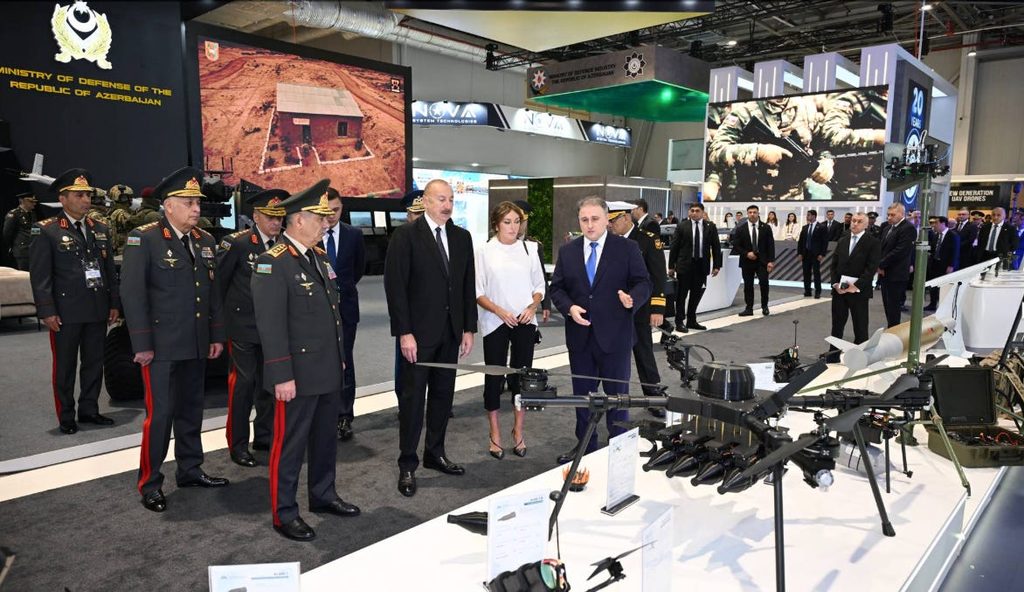
In the same context, the two sides have also placed joint UAV production on their cooperation agenda. In 2023, Azerbaijan’s minister of defense industry met with Moshe Elazar, head of the Israeli company Aeronautics, on the sidelines of the International Defence Exhibition (IDEX) in Abu Dhabi to discuss expanding cooperation in joint UAV production.[21] In 2024, the Israeli company AS Holdings and its subsidiary, Ari Arms, signed a strategic memorandum of understanding with Azersilah, a state-owned company affiliated with Azerbaijan’s Ministry of Defense Industry, to cooperate in small-arms production.[22] This cooperation entered the production phase in 2026 with the establishment of a joint factory in Azerbaijan. The facility began manufacturing the OR-4 rifle, designed on the basis of the Western AR-15 platform. According to published reports, this marked the first instance of Western-designed rifle production, rather than Soviet-designed rifle production, within Azerbaijan’s defense industry.[23]
Further evidence of this expanding cooperation can be found in statements made by Michael Levin, senior vice president and head of regional business development at Elbit Systems, on the sidelines of the ADEX-2026 International Defense Industry Exhibition in Baku. He announced that the company had proposed localizing the production of some of its products in Azerbaijan in cooperation with local partners. According to Levin, proposals submitted to Azerbaijani officials covered three areas: localizing the production of Elbit Systems products, digitizing Azerbaijan’s armed forces, and developing the production of rocket artillery systems and loitering munitions.[24]
3. Linking Military Cooperation to Geopolitical and Security Considerations:
The third dimension of bilateral cooperation concerns the Israeli regime’s efforts to connect its military and security relations with Azerbaijan to broader geopolitical and security considerations, particularly in the period following the Second Nagorno-Karabakh War. Azerbaijan occupies a distinctive geopolitical position because of its proximity to Iran, Russia, and Turkey, its access to the Caspian Sea, and its location at the intersection of the South Caucasus, Central Asia, and Eurasian transport routes. From this perspective, expanding military and security ties with Baku provides Israel not only with direct defense benefits but also with opportunities to make indirect use of Azerbaijan’s geographic and strategic assets. This position is particularly significant for the Israel in terms of intelligence collection, monitoring security developments in the Caucasus, and gaining a better understanding of the strategic environment surrounding Iran, Russia, and Turkey. Arms cooperation is also linked to bilateral relations in other strategic areas, particularly energy. Azerbaijan is a major supplier of oil to Israel, and some estimates suggest that approximately 40 percent of the Israel’s oil requirements are met through Baku.[25]
4. Conclusion
An examination of military cooperation, particularly in the field of arms, between Azerbaijan and Israel indicates that these relations have gradually moved beyond arms purchases and developed into a form of defense, technological, and security partnership. The significance of this process lies not only in strengthening Baku’s military capabilities but also in enabling Tel Aviv to exploit Azerbaijan’s geopolitical position to advance its security objectives in the Caucasus, particularly in areas surrounding Iran’s borders. As one intelligence official from Israel acknowledged in this regard, “Azerbaijan is a safe haven for intelligence operations. Our presence here is discreet but significant. Azerbaijan is virtually unmatched in its susceptibility to intelligence penetration.”[26] The continuation of this cooperation could expand intelligence capabilities, affect the regional intelligence balance, and heighten the security concerns of neighboring countries, particularly Iran and Russia. Moreover, the enhancement of Azerbaijan’s military capabilities and the development of infrastructure for joint arms production could, amid persistent regional disputes, intensify arms competition and give rise to new security dynamics in the South Caucasus. Overall, the principal concern is that Azerbaijan’s territory and strategic assets could become a platform for expanding the Israeli regime’s military, security, and intelligence influence in the region. Such a development would affect not only the security of Iran’s northern borders but also stability in the Caucasus and the security of Azerbaijan’s other neighboring countries.
References
1. Murinson, A. (2014), The Ties between Israel and Azerbaijan, Begin-Sadat Center for Strategic Studies, Mideast Security and Policy Studies No. 110, p. 12.
2. Cagapty, S. (2005), “Good Relations between Azerbaijan and Israel: A Model for Other Muslim States in Eurasia,” The Washington Institute for the Near East Policy. Available at: https://www.washingtoninstitute.org/policy-analysis/good-relations-between-azerbaijan-and-israel-model-other-muslim-states-eurasia
3. Israel Line (1997), “Netanyahu Meets with President of Azerbaijan in Baku.” Available at: https://irp.fas.org/news/1997/970829-il.htm
4. Leach, T. (2003), “The Great Game, Caspian Oil & Pipeline Politics,” AQ: Australian Quarterly, 75(6), 29–31, p. 30.
5. Delanoe, I. (2021), “Israel-Azerbaijan: And Alliance in Search Renewal,” French Foundation for Strategic Studies (FMES). Available at: https://fmes-france.org/israel-azerbaijan-an-alliance-in-search-of-renewal/?utm_
6. Murinson, A. (2014), p. 23.
7. Saidov, J. A. (2025), “Azerbaijan–Israel Strategic Partnership in the 21st Century,” Регіональні студії, (43), 179–184. https://doi.org/10.32782/2663-6170/2025.43.28, p. 182.
8. Saidov, J. A. (2025).
9. Hasanov, M. (2026), “The Establishment of Azerbaijan’s Diplomatic Representation in Israel: Historical, Economic, and Military-Political Determinants,” Scientific Work: International Scientific Journal, 20(4), 197–226. https://doi.org/10.36719/2663-4619/128/197-226, pp. 218–219.
10. Murinson, A. (2014), p. 26.
11. Report.az (2016), “Ilham Aliyev: Contracts between Azerbaijani and Israeli Companies for Purchasing Defense Equipment Close to 5 Bln USD.” Available at: https://report.az/en/amp/foreign-politics/ilham-aliyev-contracts-between-azerbaijani-and-israeli-companies-for-purchasing-defense-equipment-c?
12. Wezeman, P. D., Kuimova, A., and Smith, J. (2021), “Arms Transfers to Conflict Zones: The Case of Nagorno-Karabakh.” Available at: https://www.sipri.org/commentary/topical-backgrounder/2021/arms-transfers-conflict-zones-case-nagorno-karabakh
13. Hasanov, M. (2026), p. 219.
14. Saidov, J. A. (2025), “Azerbaijan–Israel Strategic Partnership in the 21st Century,” Регіональні студії, (43), 179–184. https://doi.org/10.32782/2663-6170/2025.43.28, p. 182.
15. Oztarsu, M. F., and Ibrahimov, R. (2026), “No Longer Small? Azerbaijan’s Pursuit of Middle Power Status,” Third World Quarterly, 47(5), 977–997.
16. Bernard-Pearl, J. (2024), “New Security Trends in the Caucasus and Central Asia: Sales of Russian Arms Decline,” Caspian Policy Center, p. 6. Available at: https://api.caspianpolicy.org/media/ckeditor_media/2024/08/27/security-trends-in-central-asia-and-south-caucasus_CxopCxu.pdf?
17. Egozi, A. (2023), “Azerbaijan Buys Barak MX Air Defence System from Israel,” Defence Industry Europe. Available at: https://defence-industry.eu/azerbaijan-to-buy-barak-mx-air-defence-system-from-israel/?
18. Israel, D. (2024), “Azerbaijan Buys Israeli Advanced High-Altitude System to Detect Iranian, Armenian Missiles and Aircraft.” Available at: https://www.thecaliforniacourier.com/azerbaijan-buys-israeli-advanced-high-altitude-system-to-detect-iranian-armenian-missiles-and-aircraft/
19. Mehdiyev, M. (2021), “Azerbaijan, Israel Expand Defense Cooperation with New Joint Venture,” Caspian News. Available at: https://caspiannews.com/news-detail/azerbaijan-israel-expand-defense-cooperation-with-new-joint-venture-2021-3-26-48
20. Azercosmos (2023), “IAI and Azercosmos Announce Agreement on Azersky-2 Program.” Available at: https://azercosmos.az/en/media-center/news/iai-and-azercosmos-announce-agreement-on-azersky-2-program
21. News.am (2023), “Israel and Azerbaijan Discuss Expansion of Joint Drone Production.” Available at: https://news.am/en/news/746243
22. Aghajanova, H. (2024), “Azerbaijan, Israel Mark Defense Industry Partnership with MoU.” Available at: https://www.trend.az/azerbaijan/politics/3950067.html
23. Egozi, A. (2026), “Azerbaijan Produces Ari Arms Rifles in Israel Partnership,” European Defence and Security. Available at: https://euro-sd.com/2026/10/news/land/54279/azerbaijan-ari-arms
24. Mahmudov, K. (2026), “Israel’s Elbit Systems Proposes Localizing Manufacturing of Its Products in Azerbaijan.” Available at: https://report.az/en/amp/foreign-politics/israel-s-elbit-systems-proposes-localizing-production-of-its-products-in-azerbaijan
25. von Esse, H. (2023), “zerbaijan’s Uncertain Geopolitical Rise in a South Caucasus,” The Stockholm Centre for Eastern European Studies (SCEEUS), SCEEUS Report No. 17, pp. 1–24, p. 11. Maelstrom.
26. Omidi, A. (2025), “Azerbaijan’s Relations with Israel: Classic Alliance, Strategic Partnership, or Marriage of Convenience,” Israel Affairs, 31(1), 9–24, p. 18.